Fes el-Bali: Navigating the World's Largest Living Medieval City
Fes el-Bali is a living, breathing 9th-century city — no cars, 9,000 streets, and a 1,200-year-old university. It is Morocco's most profound and complex city, and the most rewarding to explore slowly.
A City Frozen in Time
Fes el-Bali — the old city of Fes — was founded in 789 CE, making it one of the oldest continuously inhabited cities on earth. Walk through its 9,000 lanes and you move through 12 centuries of Islamic urban life: madersas built by the Merinid sultans, a tannery district that has operated by the same methods since the 11th century, and the world's oldest continuously operating university (the University of al-Qarawiyyin, founded 859 CE — 200 years before Oxford).
There are no cars in Fes el-Bali. Goods move by mule and handcart. The streets are too narrow for anything else. When a loaded mule appears behind you, the alley's walls press close, and you flatten yourself into a doorway — welcome to the medieval city.
Getting Oriented
Fes is actually three cities layered on top of each other:
Everything you want to see is in Fes el-Bali. The city centre is the Bou Jeloud Square (Blue Gate), where the main entrance arch marks the boundary between the modern world and the old one.
Getting lost is inevitable. The streets are not numbered, not always named, and often not on any map. Hire a licensed guide from the official tourist office for your first day — they'll show you the major landmarks and give you a mental map you can orient by on subsequent days.
The Essential Sights
Bou Inania Medersa
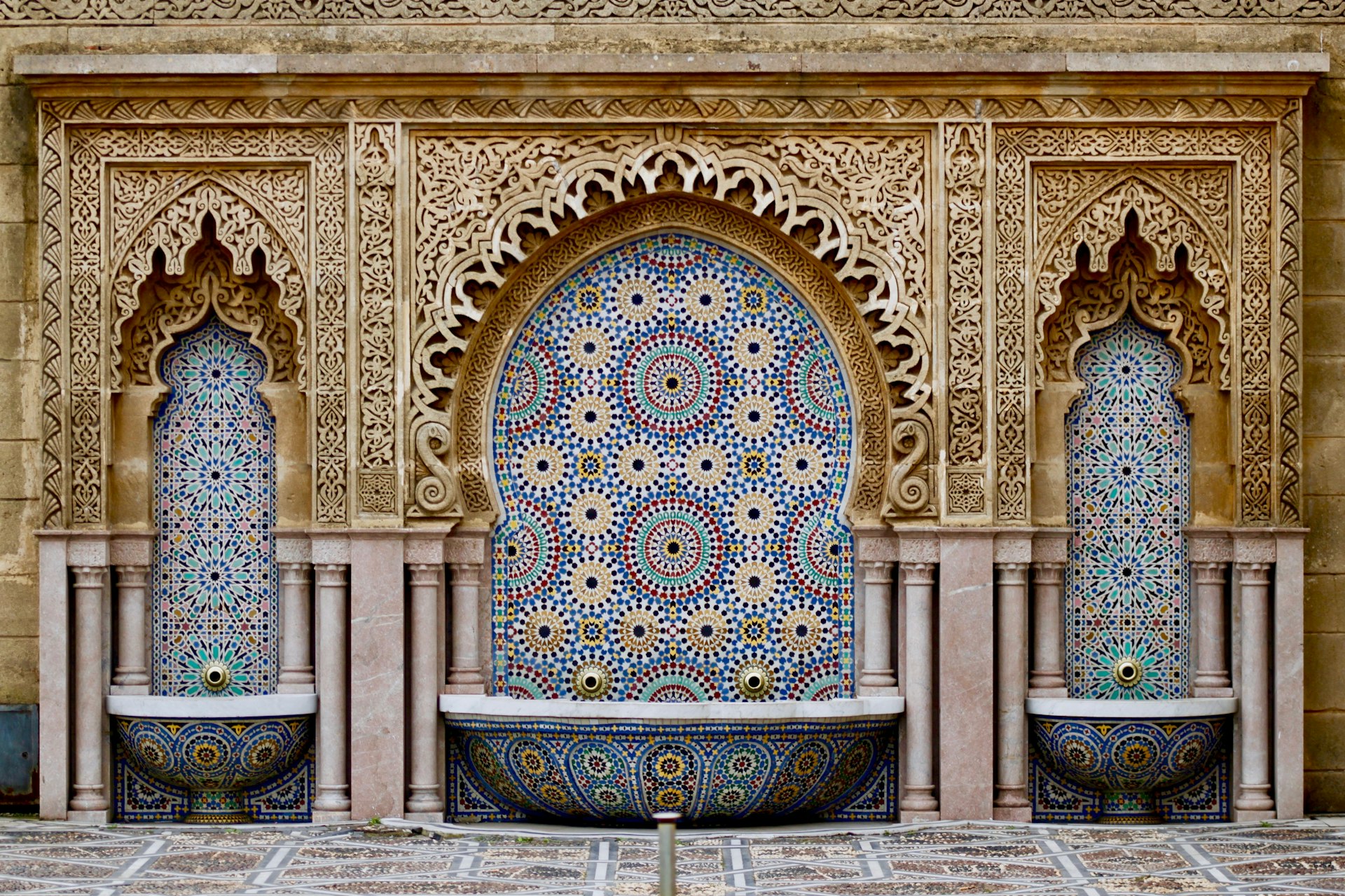
The finest example of Merinid architecture in Morocco. Built 1350–55 CE, the medersa has a central courtyard tiled in the most intricate zellige patterns you'll see anywhere, topped by carved stucco panels and cedar screens that took artisans years to complete. A Quranic inscription runs continuously around the courtyard walls in Kufic script.
Climb to the roof for views over the rooftops to the minarets and mountains beyond.
Chouara Tannery
The most dramatic sight in all of Morocco's medinas. The tannery has been in continuous operation since the 11th century. From the upper terraces of the surrounding leather shops, you look down into a hive of round stone vats filled with dye and tanning chemicals — ochre, red, green, and the deep brown of walnut. Men wade waist-deep in the vats, stamping the hides with their feet.
The smell is powerful (it's made from pigeon droppings and quicklime). The leather shops will offer you mint to hold to your nose. Accept it gratefully and stay as long as you want — the view changes constantly as workers move through their rotation.
Best time to visit: Morning (8–11am) when the light fills the vats. Closed Fridays.
Al-Attarine Medersa
Next to the Kairaouine Mosque, this 14th-century medersa has a smaller courtyard than Bou Inania but arguably finer carved stucco. The name means "spice market" — it was built next to the perfume souk that still fills the street outside with the scent of oud and rose water.
Kairaouine Mosque and University
Non-Muslims cannot enter the mosque, but you can glimpse its vast interior through the open doors — 16 naves, 270 columns, a courtyard with fountain. The University of al-Qarawiyyin, attached to the mosque, is the oldest continuously operating university in the world.
Nejjarine Museum of Wooden Arts
In a beautifully restored 18th-century funduq (caravanserai) near the carpenters' souk. Four floors of carved wooden doors, musical instruments, and architectural elements from the region's finest craftsmen. The rooftop terrace has one of the best views over the medina.
The Mellah
Fes's historic Jewish quarter is in Fes el-Jdid, a 15-minute walk from Bou Jeloud. The Mellah has a completely different architectural character from the Medina — taller buildings with wrought-iron balconies, narrow streets that manage to feel both more urban and more intimate. The Ibn Danan Synagogue (17th century) has been beautifully restored and is open to visitors.
Where to Eat in Fes
Dar Hatim: Family-run restaurant hidden in a 16th-century riad near the tanneries. No sign outside — you find it by local knowledge (ask your riad). The best bastilla in Morocco.
The R'cif Market Sandwiches: The kefta-in-khobz sandwich stalls near the R'cif bridge. Open from 7am, popular with students from the university. The best 15 MAD you'll spend in Fes.
Clock Café: Founded by an English chef who fell in love with Fes. Excellent breakfast, inventive Moroccan–international fusion, and a beautiful rooftop. Also runs excellent cooking classes.
The Fes Festival
Every June, Fes hosts the Festival of World Sacred Music — one of the great world music festivals, held in gardens and historic monuments around the medina. Sufi musicians from Morocco, qawwali from Pakistan, gospel from the American South, classical music from Europe — all gathered in one of the world's oldest cities. If you can time your visit to coincide, do.