Marrakech: The Complete First-Timer's Guide
Everything you need to know before your first visit to the Red City — from navigating the medina maze to finding the best riads and avoiding common tourist traps.
Welcome to the Red City
Marrakech hits you all at once. The smell of cumin and rose water, the blare of a moped horn, a snake charmer's flute floating above the crowd — within five minutes of stepping into Djemaa el-Fna, you'll understand why this city has enchanted travellers for a thousand years.
But Marrakech can also be overwhelming for first-timers. This guide tells you everything our local guides wish every visitor knew before they arrived.
Getting Your Bearings
Marrakech is divided into two distinct worlds: the Medina (old city) and Gueliz (the modern French-built Ville Nouvelle). Most of what you want to see is in the Medina, a UNESCO World Heritage Site since 1985.
The heart of the Medina is Djemaa el-Fna — the great square. Everything radiates out from here. To the north stretches the souk district; to the south, the Kasbah with the Saadian Tombs and El Badi Palace. The major palaces and gardens form a rough ring around the southern Medina.
Getting lost is normal. Even locals take wrong turns in the narrow derbs (alleyways). Embrace it. The best discoveries happen when you stop trying to navigate and start following your nose.
The Top 10 Things to See and Do
1. Djemaa el-Fna at Sunset
The square transforms completely between day and night. By 6pm, food stalls set up, musicians tune their guembri, and the air fills with smoke from a hundred grills. Arrive early for a rooftop table at one of the surrounding cafés — order a mint tea and watch the show from above before descending into it.
2. The Souks
The souk district north of Djemaa el-Fna is organised by trade: spice souks, leather souks, silver souks, carpet souks. Walk through without buying anything on your first day — just observe prices and quality. On your second day, you'll haggle with much more confidence.
Haggling basics: The opening price is almost always 3–4x the expected final price. Counter at 30–40% of the ask. Be friendly, never aggressive, and always be willing to walk away.
3. Jardin Majorelle
The famous cobalt-blue garden created by French painter Jacques Majorelle and later restored by Yves Saint Laurent. Arrive when it opens at 8am to beat the crowds. The garden is small but extraordinary — the blue against the bougainvillea pink is unlike anything else in the city.
4. Bahia Palace
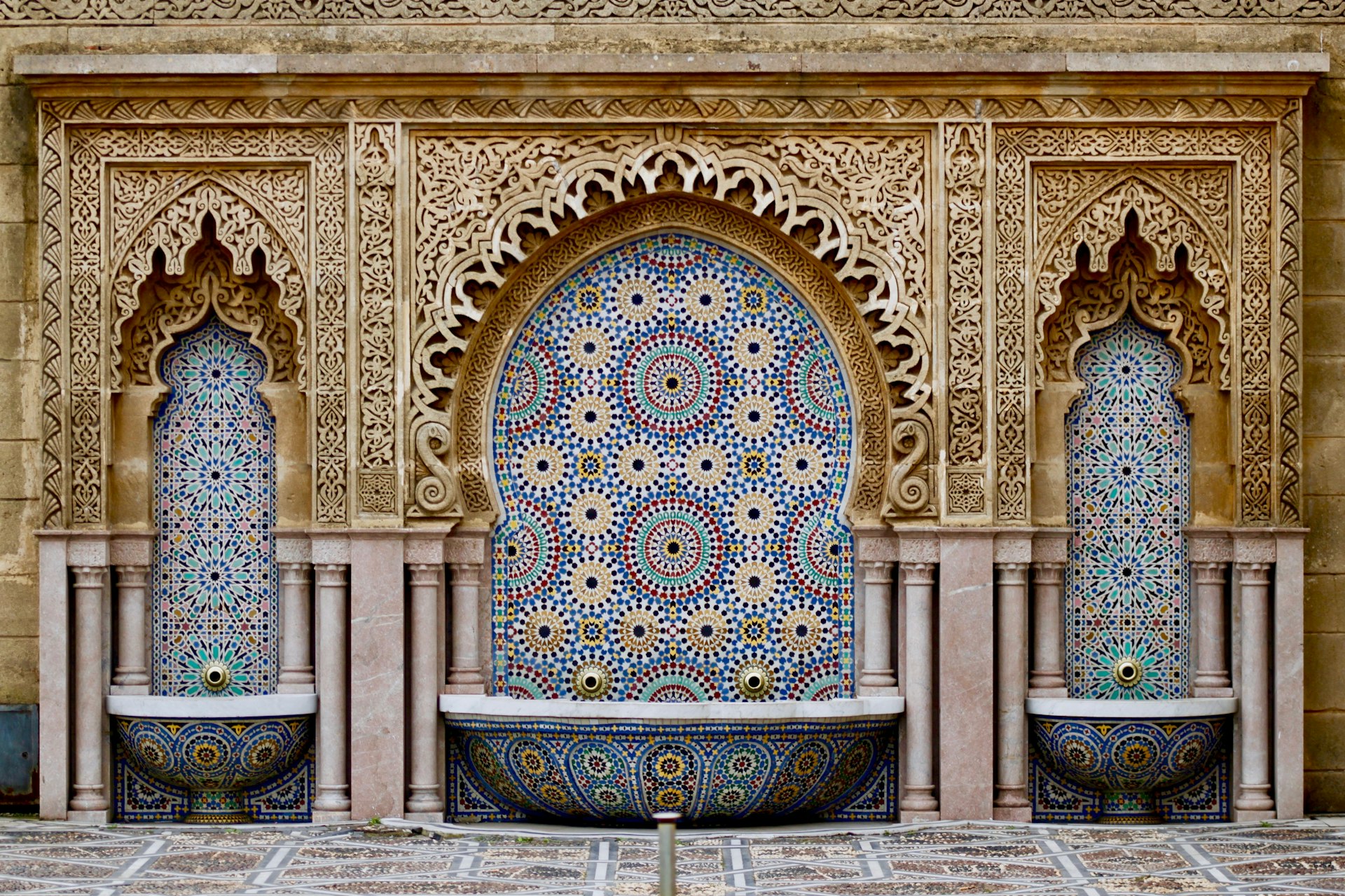
A masterpiece of late 19th-century Moroccan architecture: carved cedarwood ceilings, hand-painted zellige tilework, and a harem garden of orange trees and roses. Less crowded than most major sites and genuinely breathtaking.
5. Saadian Tombs
Sealed by Sultan Ahmad al-Mansur in the 17th century and only rediscovered in 1917, these royal tombs are one of Marrakech's most evocative sites. The Chamber of the Twelve Columns is particularly beautiful.
6. Ben Youssef Medersa
A 14th-century Quranic school with the most intricate stucco and carved cedar you'll see anywhere in Morocco. The central courtyard, reflected in its still pool, is one of the great architectural sights of North Africa.
7. Musée Yves Saint Laurent
Even if fashion isn't your thing, this museum is worth visiting for its architecture alone. The building by Studio KO is a work of art. The permanent collection traces YSL's 40-year love affair with Marrakech.
8. El Badi Palace
Largely in ruins, but the scale is staggering. 360 rooms, sunken gardens, and a terrace with storks nesting on the battlements. Come in the late afternoon when the golden light fills the crumbling ochre walls.
9. Mellah (Jewish Quarter)
One of the most overlooked corners of the Medina. The Mellah has a different character from the rest — taller houses with wrought-iron balconies, a covered market, and the beautifully restored Slat al-Azama synagogue.
10. Day Trip to Ouzoud Falls
Two hours from Marrakech, these 110-metre waterfalls are the highest in North Africa. Swim in the turquoise pool at the base, spot Barbary macaques in the olive trees, and eat grilled fish at a riverside terrace. Best organised as a group tour.
Where to Stay
Splurge: La Mamounia — the legendary palace hotel that Churchill painted from. Book months ahead.
Mid-range: A riad in the Medina. We recommend the area between Mouassine and the Kasbah. Expect to pay 80–150€/night for a well-restored riad with breakfast. Riads are the best way to experience Marrakech — their walled gardens become your private oasis after a day in the souks.
Budget: The Mouassine neighbourhood has some excellent smaller riads and guesthouses in the 30–60€ range. Always check that breakfast is included.
Where to Eat
Practical Tips
Dress code: Shoulders and knees covered in the Medina. This is not just etiquette — you'll also avoid harassment and feel more comfortable. A light scarf solves everything.
Photography: Always ask before photographing people. Many people in the souks and at Djemaa el-Fna will ask for money if you point a camera at them — and that's fair enough. A small tip (5–10 MAD) is appropriate.
Transport: Petits taxis (small red cars) are metered and reliable. Agree on the meter before you get in. From Djemaa el-Fna to Gueliz costs around 30–40 MAD.
Safety: Marrakech is very safe for travellers. The biggest risk is getting lost and accepting help from someone who then asks for payment. Politely decline unsolicited "guidance" in the souks.
How Many Days Do You Need?
Marrakech rewards slow travel. The longer you stay, the more the city reveals itself.